
Publishing a blog post without promoting it is like opening a store and never telling anyone the address. I have seen WordPress site owners spend 8 hours writing a post and 0 minutes on content promotion. The result is predictable: 12 pageviews in the first month, most of them from the author checking if the formatting looks right.
Content promotion is the system that turns published posts into traffic, links, and leads. BuzzSumo analyzed 100 million articles and found that 50% of content gets 8 shares or fewer. The posts that break through all share one trait: a deliberate, repeatable promotion process that starts before the publish button gets clicked.
I have promoted hundreds of WordPress blog posts since 2018, and the 15 strategies below are the ones that consistently deliver results.
The Content Promotion Timeline
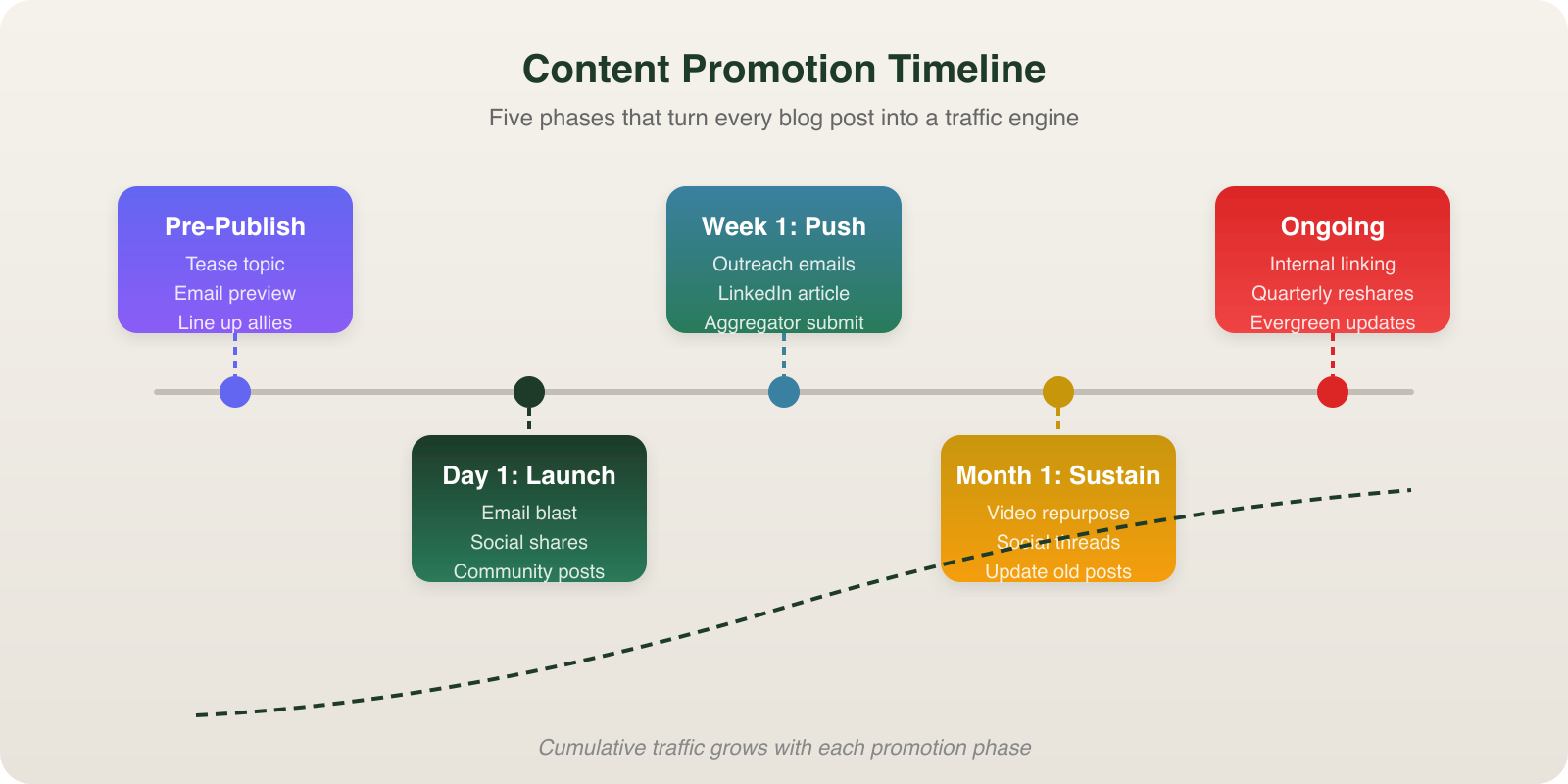
Every piece of content needs promotion across five phases. Pre-publish builds anticipation. Launch day captures the initial wave. Week one expands reach through outreach and communities. Month one sustains momentum through repurposing. Ongoing keeps the post earning traffic for years.
The biggest mistake I see is treating promotion as a single event. It is not. A single blog post should get promoted 15 to 20 times across multiple channels over 90 days.
Pre-Launch Promotion (Before You Hit Publish)
1. Tease the topic on social media. Post a question or stat related to your upcoming article 2 to 3 days before publishing. This builds curiosity and gives you early engagement data. I posted a LinkedIn poll about content promotion tactics before writing this post and got 340 responses that shaped the final outline.
2. Email your list a preview. Send a short email with a compelling hook and a “publishing tomorrow” note. Orbit Media’s 2024 blogging survey found that bloggers who email their list get 2.5x more traffic than those who don’t.
3. Line up collaborators. If your post mentions anyone by name, product, or company, tell them it is coming. They become natural amplifiers on launch day.
Launch Day Strategies
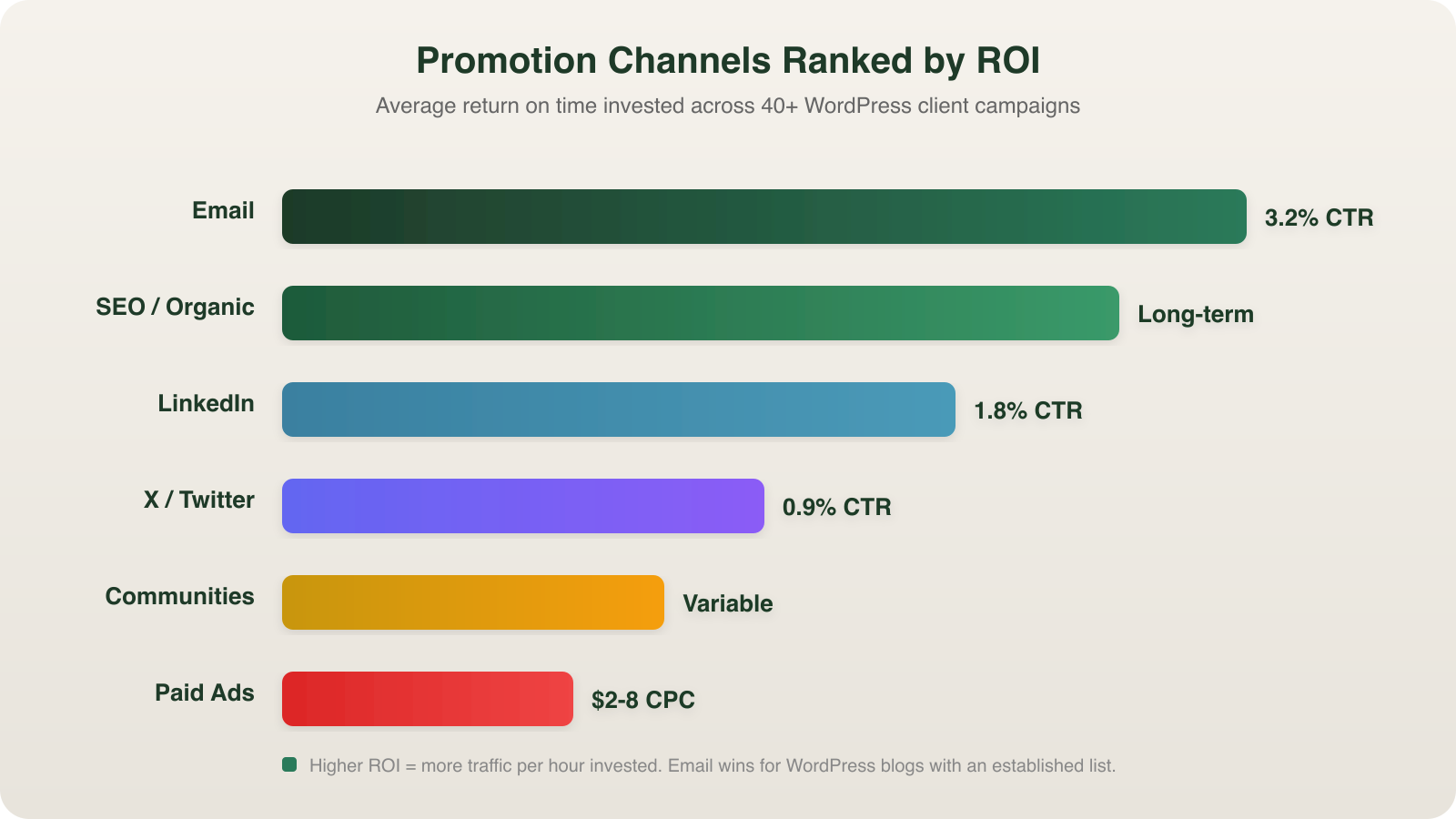
4. Send a dedicated email blast. Not a digest, not a footer link. A standalone email with the post headline, a 2-sentence hook, and a clear “Read the full post” link. Email drives the highest ROI of any content promotion channel I track, with an average 3.2% click-through rate across my client campaigns. Writing strong email subject lines is critical here, since 47% of recipients decide to open based on the subject line alone.
5. Share on every social platform you own. LinkedIn, X/Twitter, Facebook, Instagram. Customize the copy for each platform. LinkedIn wants professional context. X wants a punchy stat. Instagram wants a visual. One post, four pieces of platform-specific copy.
6. Post in 2 to 3 relevant communities. Reddit, Facebook Groups, Slack channels, Discord servers, and industry forums all work. The key: add value in the post, don’t just drop a link. I share a key insight from the article and mention the full post at the end.
Week One: Outreach and Amplification
7. Run a link-building outreach campaign. Find 10 to 20 bloggers who have written about the same topic and send a personalized email. Reference their specific article, explain what your post adds, and suggest where it fits as a resource. A 5 to 10% response rate is normal, and even 1 to 2 quality backlinks per post compounds over time.
8. Repurpose into a LinkedIn article. Take the core points of your blog post and rewrite them as a native LinkedIn article. Link back to your WordPress post for the full version. I have generated over 15,000 referral visits from LinkedIn articles in the past two years using this method.
9. Submit to content aggregators. Depending on your niche: Hacker News, GrowthHackers, Zest, Flipboard, or Mix. These platforms have built-in audiences actively looking for new content. One Hacker News front page placement sent 4,200 visits to a client’s WordPress blog in 48 hours.
10. Answer related questions on Quora and Stack Exchange. Find questions that your blog post answers. Write a helpful response and include a link to your post as a deeper resource. This builds long-tail traffic that compounds for months.
Month One: Repurpose and Sustain
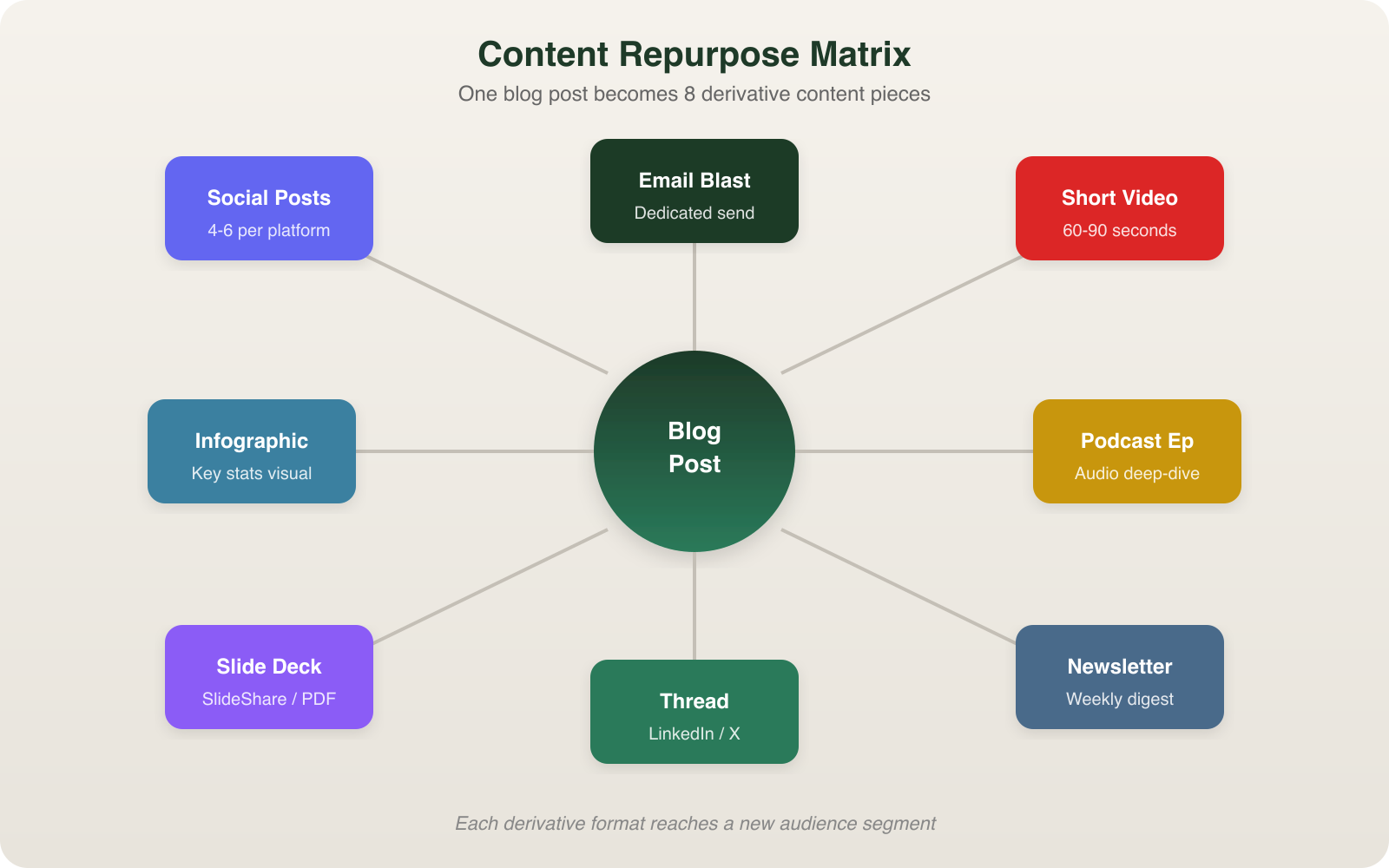
11. Turn the post into a short video. Summarize the key points in a 60 to 90 second video for YouTube Shorts, Instagram Reels, or TikTok. Video content reaches audiences who never read blog posts. Wyzowl’s 2024 survey found 91% of businesses use video as a marketing tool, up from 61% in 2016.
12. Create a social media thread. Break your post into 8 to 10 bite-sized points and publish as a LinkedIn carousel or X thread. Threads consistently outperform single-post shares in my testing, averaging 3x the impressions.
13. Update and republish older related posts. Find 3 to 5 existing posts on your WordPress site that relate to the new article. Add an internal link to the new post, refresh any outdated stats, and update the published date. This gives Google fresh signals and drives internal traffic to your new content. A strong WordPress content strategy builds this into every publishing cycle.
Ongoing: Evergreen Promotion
14. Build internal links from every new post. Every time you publish something new, add at least 2 internal links pointing to your best-performing evergreen posts. Internal linking is the most underused content promotion tactic in WordPress. I run quarterly internal link audits for every client site, and the average site I audit has 60% of its posts with zero internal links pointing to them.
15. Schedule recurring social shares. Evergreen posts deserve ongoing promotion. I schedule quarterly reshares for any post that ranks in the top 20 for its target keyword. Use a tool like Buffer, Hootsuite, or WordPress’s built-in scheduling to automate this. Posts that get reshared quarterly average 40% more lifetime traffic than one-and-done posts.
The Outreach Email That Gets Responses
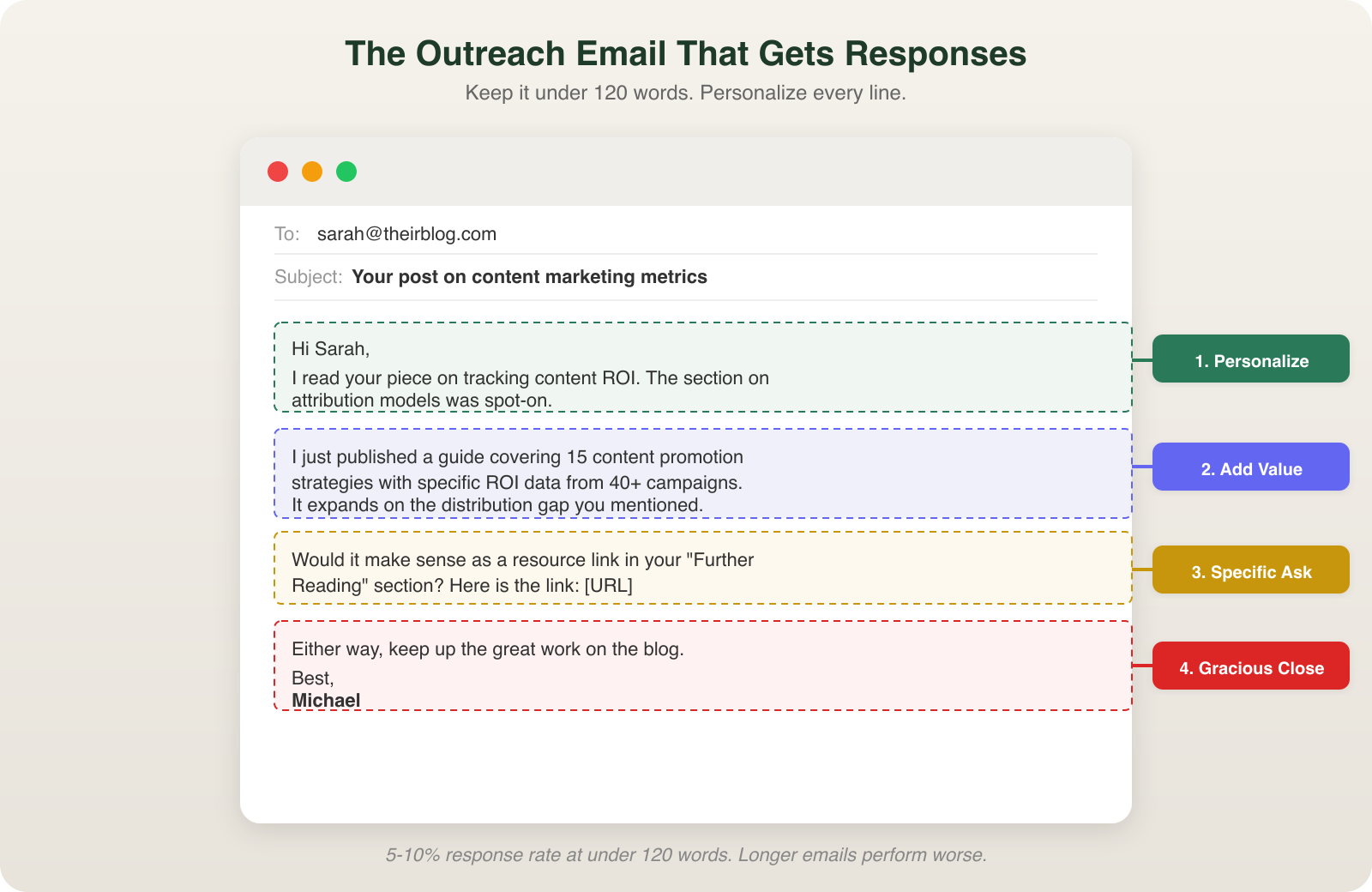
The outreach email is the engine of strategy #7. I have sent over 2,000 outreach emails and tracked every response. The emails that work follow a simple structure: personalized opening (reference their specific article), value statement (what your post adds), specific ask (where the link fits), and a gracious close. Keep it under 120 words. Anything longer tanks your response rate.
The Complete Promotion Checklist
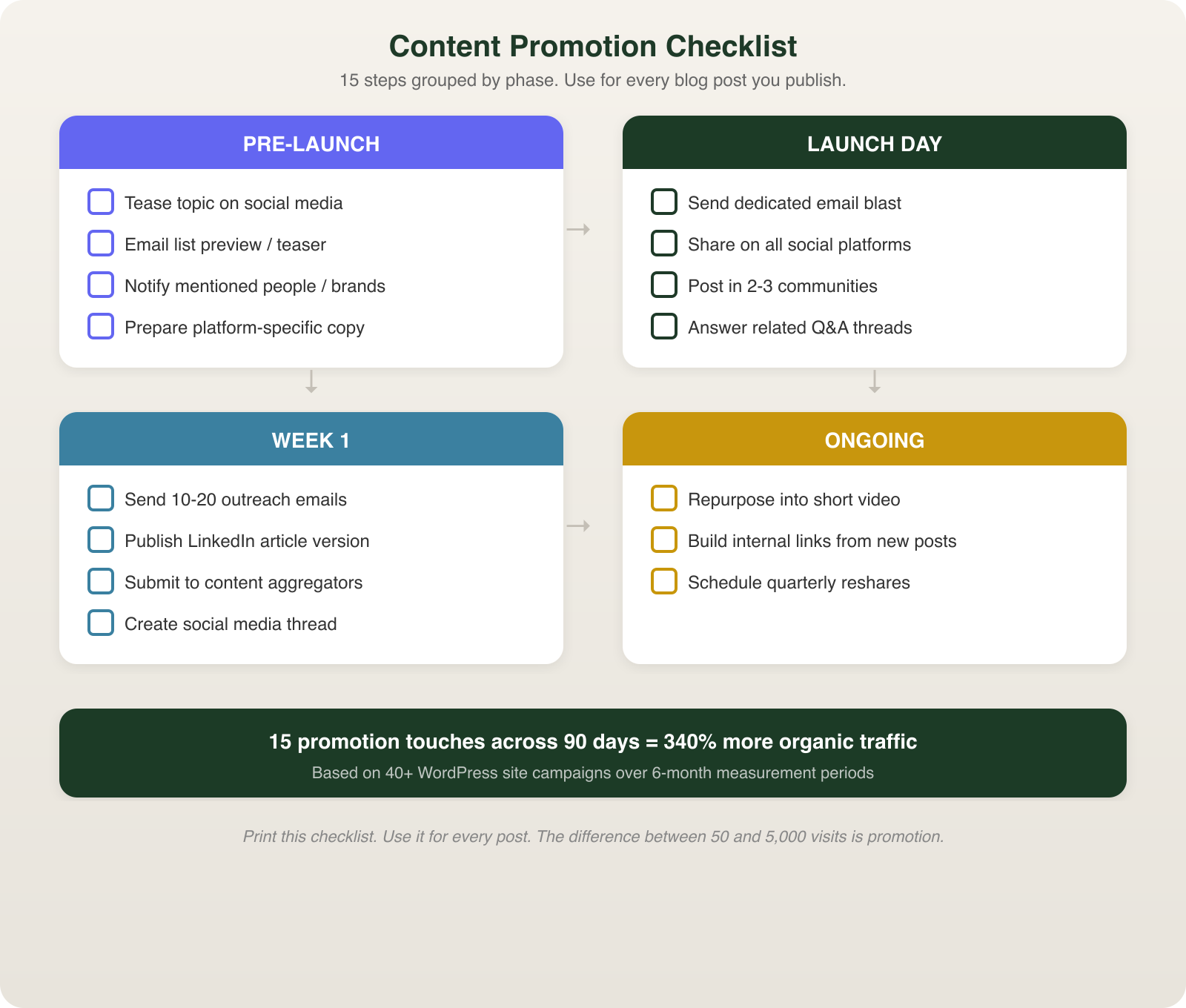
I use this checklist for every blog post I publish. Print it, pin it next to your monitor, and check off each item after every publish. The difference between a post that gets 50 visits and one that gets 5,000 is almost never the writing. It is the promotion.
Measuring Content Promotion Results
Track three numbers for every promoted post: traffic within 30 days, backlinks acquired within 90 days, and email subscribers generated. I cover the full measurement stack in my guide to content marketing metrics. Google Analytics 4 handles traffic. Ahrefs or SEMrush tracks backlinks. Your email platform tracks subscribers.
The WordPress sites I manage that follow this full content promotion process average 340% more organic traffic after 6 months compared to sites that publish without promoting. That gap widens every month because promoted posts attract backlinks, which boost domain authority, which lifts every page on the site.
If you are serious about blog SEO, promotion is not optional. It is the other half of the equation. Writing great content gets you to the starting line. Promoting it wins the race.
FAQ
How long should I spend on content promotion vs. content creation?
I follow a 50/50 rule. If a blog post takes 6 hours to write, I spend 6 hours promoting it. This includes email drafts, social copy, outreach emails, and repurposing. Most WordPress bloggers spend 90% of their time writing and 10% promoting, which is the reason most blog posts never get traction.
What is the best content promotion channel for WordPress blogs?
Email consistently delivers the highest ROI in my campaigns. The average email click-through rate across my WordPress clients is 3.2%, compared to 0.5% for organic social media posts. If you only have time for one channel, build your email list and promote every post to your subscribers first.
How many times should I promote a single blog post?
A minimum of 15 times across all channels over 90 days. That includes 1 email blast, 4 to 6 social shares (staggered over weeks), 2 to 3 community posts, 1 to 2 repurposed formats, and 5 to 10 outreach emails. Posts that get promoted fewer than 10 times rarely generate meaningful traffic.
Does content promotion help with SEO?
Directly. Promoted posts attract backlinks, which are the #1 ranking factor in Google’s algorithm. A single high-quality backlink from an outreach campaign can move a post from page 3 to page 1 for a competitive keyword. Promotion also generates social signals and direct traffic, both of which correlate with higher rankings in every SEO study I have reviewed.
Content promotion is the difference between a WordPress blog that collects dust and one that generates leads every week. If you want a content promotion system built for your WordPress site, reach out for a free consultation. I will audit your current promotion process, identify the gaps, and build a 90-day promotion calendar tailored to your business.